
Waterproofing Mistakes That Cause Long-Term Damage – What Every Homeowner & Contractor Must Know
Facing seepage, damp walls, or terrace leakage? Learn the most common waterproofing mistakes in construction and how to prevent long-term structural damage in your home.
2/19/20262 min read
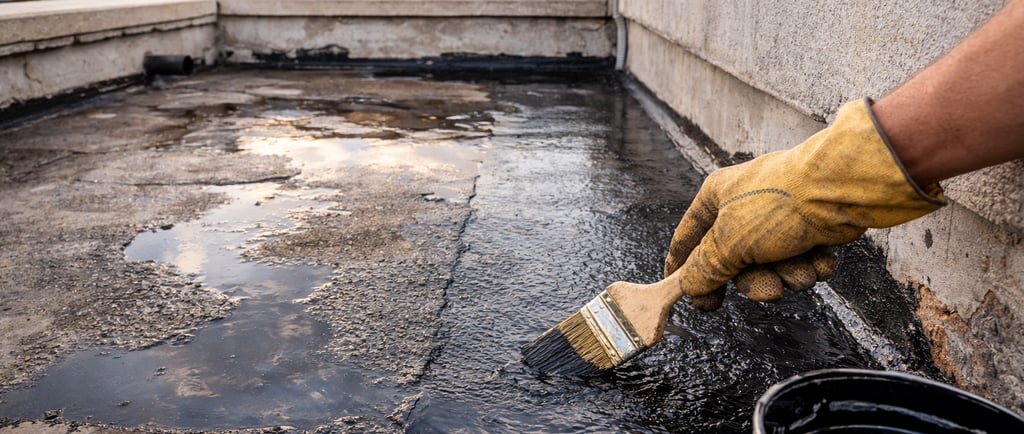
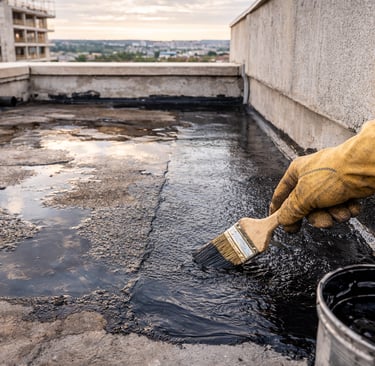
Waterproofing Mistakes That Cause Long-Term Damage
It usually starts small.
A faint damp patch on the ceiling.
A little paint bubbling near the wall corner.
A slight musty smell during monsoon.
Many homeowners ignore it in the beginning.
But months later, that small patch becomes peeling plaster, cracked paint, and even rusted reinforcement.
Water is silent — but destructive.
In construction, waterproofing is one of the most underestimated stages. And unfortunately, most long-term structural problems begin with small waterproofing mistakes made during construction.
Let’s understand where things go wrong — and how to avoid them.
Mistake 1: Treating Waterproofing as a “Finishing Item”
One of the biggest errors in residential construction is thinking waterproofing comes at the end.
In reality, waterproofing is a system — not a surface treatment.
It should be planned during:
• Foundation work
• Basement construction
• Toilet slab casting
• Terrace slab execution
• External wall plastering
If waterproofing is added later as a “repair solution,” it becomes temporary.
Prevention is always cheaper than correction.
Mistake 2: Poor Surface Preparation Before Application
Many failures occur not because material was bad — but because surface preparation was poor.
If the slab surface is:
• Dusty
• Uneven
• Not properly cured
• Contaminated with oil or loose particles
The waterproofing layer will not bond correctly.
Even the best membrane fails on a poorly prepared surface.
Proper cleaning, crack filling, slope correction, and curing are critical before application.
Mistake 3: Ignoring Proper Slope on Terraces
Terrace leakage is extremely common.
In many buildings, the real issue is not waterproofing material — it is poor slope.
Water should never stagnate on a terrace.
If water pools after rainfall, it slowly penetrates through micro-cracks and joints.
Proper slope toward drainage outlets during slab finishing can prevent years of seepage issues.
This is basic engineering — but often overlooked on site.
Mistake 4: Using Low-Quality Waterproofing Materials
To reduce cost, some contractors use cheaper waterproofing chemicals.
Initially, everything looks fine.
But after one or two monsoon seasons, cracks begin appearing.
Waterproofing chemicals should be selected based on:
• Area application (toilet, terrace, basement)
• Climate condition
• Exposure to sunlight
• Structural movement
Using the wrong product for the wrong application leads to failure.
Material selection must match technical requirement — not just budget.
Mistake 5: No Waterproofing at Critical Junctions
Most leakage doesn’t happen in the middle of slabs.
It happens at junctions:
• Wall-to-slab joints
• Pipe entry points
• Bathroom floor traps
• Parapet wall connections
If these joints are not properly sealed with mesh and flexible coatings, cracks appear over time.
Water always finds the weakest point.
Proper detailing at junctions is essential.
Mistake 6: Skipping Waterproofing Test Before Finishing
In toilet areas and terraces, a water pond test should always be done.
This involves filling the area with water and monitoring for leakage for 24–48 hours.
Many projects skip this step to save time.
Later, tiles are laid — and leakage is discovered after possession.
At that stage, rectification becomes destructive and costly.
Testing before finishing prevents future disputes.
Long-Term Damage Caused by Poor Waterproofing
Water intrusion does not only damage paint.
It can cause:
• Rusting of reinforcement
• Concrete spalling
• Mold growth
• Electrical hazards
• Structural weakening
Over years, small seepage can turn into major structural maintenance cost.
This is why waterproofing should never be compromised.
The Right Approach to Waterproofing
Professional waterproofing requires:
• Planning at design stage
• Proper surface preparation
• Quality materials
• Skilled application
• Testing before finishing
Waterproofing is not an expense.
It is insurance for your structure.
Final Thoughts
In construction, the most expensive mistakes are the ones hidden behind plaster and paint.
Waterproofing, if done correctly during construction, protects your investment for decades.
If ignored, it becomes a recurring repair problem every monsoon.
Remember:
Water damage is slow — but continuous.
Good waterproofing is invisible — but powerful.