
How to Evaluate Construction Quality Like a Professional – A Practical Guide for Homeowners
Want to check the quality of your house construction? Learn professional methods to evaluate construction quality, materials, workmanship, and structural safety before it’s too late.
2/19/20262 min read
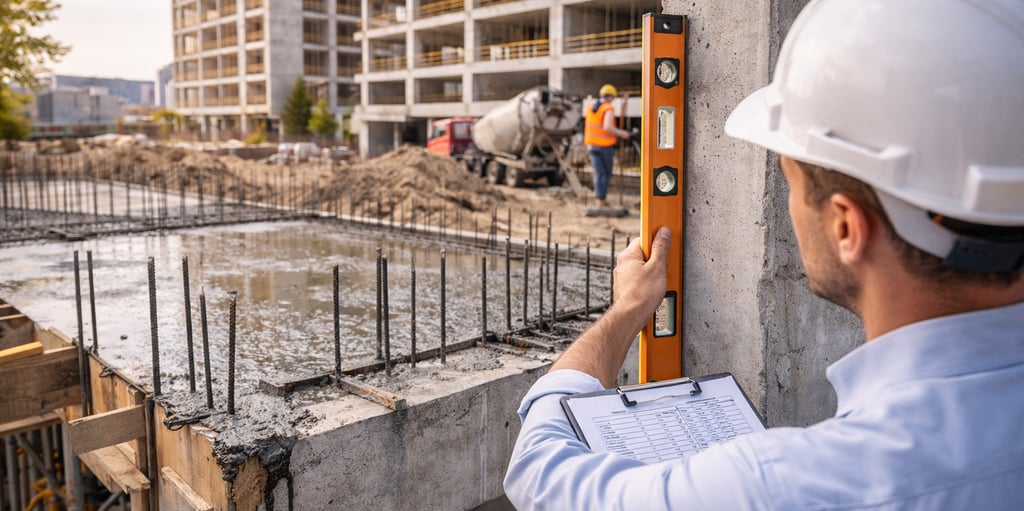
How to Evaluate Construction Quality Like a Professional
Imagine this.
Your house construction is going on. Concrete is being poured. Walls are rising. Tiles are being installed.
Everything looks fine on the surface.
But how do you really know the quality is good?
Most homeowners judge construction quality by one thing:
“Does it look neat?”
But professional construction quality is not about appearance.
It is about structural strength, precision, material standards, and execution discipline.
The truth is — by the time defects become visible, the damage is already done.
So let’s understand how to evaluate construction quality like a professional.
1. Start With Structural Strength – The Invisible Backbone
The most important quality elements are hidden inside concrete and walls.
Professional checks include:
• Proper steel bar spacing
• Correct concrete mix ratio
• Proper compaction during slab casting
• Adequate curing (minimum 7–14 days)
If curing is ignored, concrete loses long-term strength.
A slab that is not cured properly may look fine today but develop cracks within a few years.
Ask your contractor:
“How long will curing be done?”
That single question reveals seriousness.
2.Check Alignment and Level Accuracy
Professionals always check:
• Vertical alignment of columns
• Wall straightness
• Floor level uniformity
• Beam depth consistency
You can visually inspect wall straightness using a long ruler or by observing light reflection.
Uneven plaster and misaligned columns are signs of rushed workmanship.
Precision in early stages prevents finishing problems later.
3. Inspect Brickwork or Blockwork Closely
Good masonry should have:
• Uniform joint thickness
• Proper mortar filling
• Staggered brick pattern (no continuous vertical joints)
• Plumb vertical surface
If mortar gaps are visible or bricks are loosely aligned, strength reduces.
Also check if proper curing of brickwork is being done.
4. Waterproofing Quality Check
Before tiles are installed in bathrooms or terraces:
• Ensure waterproofing layer is applied properly
• Check corners and pipe joints
• Confirm water pond test is conducted
Skipping pond test is a red flag.
Most future leakage problems begin here.
5. Electrical and Plumbing Quality
Hidden services often determine long-term durability.
Professional indicators include:
• Proper pipe slopes for drainage
• Branded electrical conduits
• Neat wiring layout
• Separate plumbing lines clearly organized
Poor plumbing planning causes frequent maintenance issues.
6. Check Material Quality Transparently
As a homeowner, you should know:
• Cement brand
• Steel brand
• Block type (AAC / Fly ash / brick)
• Tile specification
• Waterproofing chemical brand
Professional contractors do not hide material specifications.
Transparency indicates confidence.
7.Finishing Quality – Where Details Matter
Finishing reflects workmanship discipline.
Look for:
• Even tile joints
• No hollow sound in flooring
• Smooth paint finish
• Sharp corners
• Proper door alignment
Hollow tile sounds indicate poor fixing.
Small finishing errors often reveal bigger execution shortcuts.
8. Documentation & Supervision
Professional construction includes:
• Structural drawings
• BOQ documentation
• Stage-wise billing
• Regular site supervision
If there is no documentation — quality control becomes difficult.
System-based execution equals professional quality.
9. Signs of Poor Construction Quality
Watch out for:
• Early cracks in plaster
• Uneven slab edges
• Water stagnation on terrace
• Exposed reinforcement
• Repeated rework on site
Frequent rework indicates planning issues.
The Professional Mindset Difference
A local contractor may focus on completing work fast.
A professional construction company focuses on:
Durability
Compliance
Structural safety
Future maintenance prevention
Speed without system reduces quality.
Final Thoughts
Evaluating construction quality is not about technical knowledge alone.
It is about awareness.
When homeowners ask the right questions and contractors maintain transparency, projects become stronger — both structurally and professionally.
Remember:
Quality in construction is not visible immediately.
But poor quality always becomes visible eventually.
Build once. Build correctly.